Notes from 2026

Article logged on July 18, 2026

A fascinating speculation of what it means to shatter the lens of nationalism and look at communities without borders. The reading list at the very end is some great speculative fiction recommendation.

I wonder if our attachment to the structure and container of America constrains our imaginations from envisioning what could actually bring those ideals to life. Humans organize to take care of each other and the ecosystem of which we are part and on which we depend. Society is born of mutual need.

The United States’ sovereignty is demonstrated by armed guards at an arbitrary border. The specific mythology of this country’s “freedom” is built on the illusion of agency imparted by independence, self-reliance, and hard work (why’s it always gotta be hard?).

We occupy a geography that’s been designated as America. We are impacted by it, but no one lives in America. I live on my block, among my neighbors and the people I see at the grocery store and the gym.

The project of Nationalism is to narrow the radius of empathy: to put rails that make us look inward for both the mundane and the muse, to change the name of the feeling of comfort from solidarity to security, to constrict us where we should be growing.

Two songs that remind me of freedom:
Article logged on July 17, 2026

A compilation of ghost stories and their remarkable convergence in South Asia:

Despite coming from different countries, languages, and faiths, many of the stories were almost identical; the same woman appeared on lonely roads, the same backwards feet exposed the supernatural, the same unexplained fever arrived the next morning. It was as though our ghosts had ignored Partition, borders, and passports long before we ever crossed them ourselves.

My South Asian ghost story was similar. We'd be driving, as we often did, from Bombay down south, either towards Kerala or Bangalore, and there'd always be the aatma. I remember the aatma of Tumkur, a woman in white that appeared in the horizon in the darkness, slowly and gracefully. She'd always be askung for a lift, politely. But you don't stop, because if you do, she will possess you, she will kill you. You know, the usual.

I find this story to be at such odds with the way we think about community in India. If someone needs help, you help them. Perhaps the tale here is a reflection of how we show up with otherness (being sufficiently far from our close community) and obscurity (when nobody is watching).

Film logged on May 25, 2026
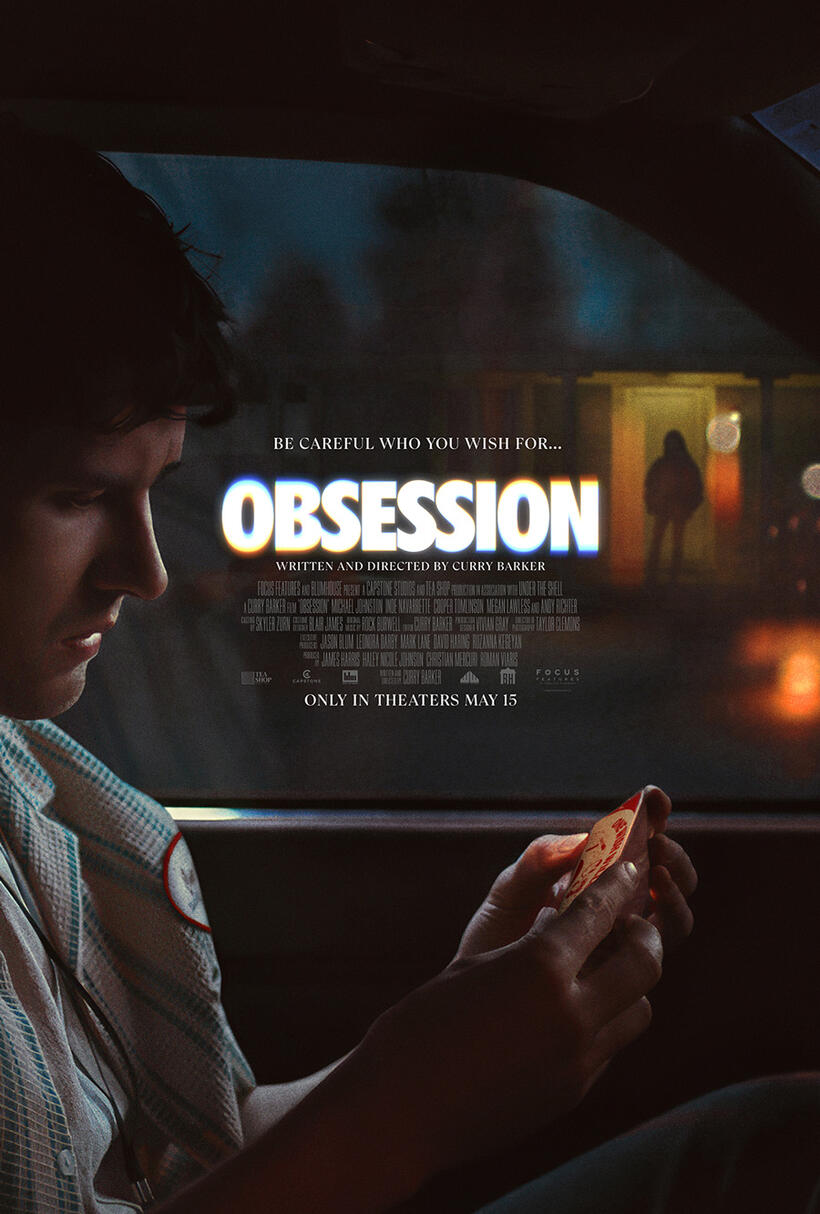
Obsession
Curry Barker, 2026

Watch enough horror and you begin to recognize familiar beats: here's the setup, there's the monster. Here's the ramp, there's the respite. Here's the fakeout, there's the finisher. And if you catch on to the pattern, it can become familiar: you time your breathing, you time your flinching and have an enjoyable, if predictable experience.

It would be a fair guess to assume that Obsession, a film about a man's desire and fantasy for a his uninterested friend would enjoy marching to this.

Instead, Obsession plays on the half-beats. The camera doesn't respect familiar paths, motion speeds up and down to create distortion. It's almost as if the ratios for the recipe have been altered, and the end result feels wrong.

This in and of itself isn't uncommon in horror. From The History and Psychology of Spooky Music and Sound Design in Film:

Clashing ideas, musical or otherwise, have a variety of uses. In horror, clashing musical notes just sounds wrong. [..] The infamous ‘tri-tone’ has been referred to as The Devil’s Interval since the late middle ages. Humans adore harmony, we latch onto notes which combine with simple mathematical ratios between their frequencies. Two notes an octave apart are at a perfect 2:1 ratio, and this relationship is so perfect to our ears that we give both notes the same (only an octave apart). The tri-tones on the other hand have an unbearable ratio of 45:32 or 64:45 depending on tuning. Oddly enough tri-tones are often used in sirens and alarms for the way they grab our attention.

Curry Barker uses these devices to tell a story of a relationship that feels wrong as a viewer. And he does so with a sense of economy: the limerence stage doesn't get more than a few seconds of montage, enmeshment is physically painful to witness, and the characters swing moods wildly, trying to match each other's off-keyness.

Even more interesting though, is the kind of story Obsession tries to tell: it's simple enough on the tin: the horror of consent and tropes of romantically crazy women is well tuned for horror. Here too, Curry Barker chooses a different beat, and what begins as a misogynistic trope quickly becomes a surgical answer to the question of what happens when patriarchy's power fantasy is realized. There's also an absurdist streak to the film's canon that's entertaining without diffusing tension.

For a film about obsession, there's no love in sight here. The villain is a nice guy, one who gets to deny culpability as he continues to enjoy the benefits of exploitation and coercion. Portraying a single character at different times to be sympathetic, manipulative, or just a bystander is another nod to the work done with a narrow script. Inde Navarrette's portrayal of Nikki is truly special: she conveys captivity, terror, and monstrosity and is given excellent material to work with. She too portrays a multitude of characters and sets the major beats of the film. She's effortlessly talented and raises this film in many ways.

Obsession is a great watch - go in with your defenses down, it's worth it. Not since Zach Cregger's Barbarian have I been so excited for a debuting director (This is his first feature film, but he has an excellent short film catalogue on YouTube). The cinematography is spacious, but uncomfortably too much - drawing the eye into negative spaces and bracing the mind for impact.

Article logged on May 12, 2026

This article captures my felt sense of Hijras - the reverence, mysticism, fear, and discomfort of seeing a third gender growing up. Fast forward to now, and it's a good reminder that Transgender itself is an umbrella term and specificity when talking about and understanding a people is a way to care and learn.

These historical and mythical references play an important role in how the Hijra community is accepted and viewed in South Asia. While many look at Hijras with something of fear and reverence on special occasions like weddings or the birth of a male child, there is also a vein of transphobic and homophobic disgust that colors the way they are perceived on the streets. They are seen as being excessively loud and their looks derided for being overly dramatic. They are often in bright colors and makeup on the street, the exact opposite of the Western beauty standards of femininity; one that is quiet, demure and frail. This contradiction is both an embrace of self-love and also a staunch defiance in the face of neat binaries.

I linked to an article about Kerala and the history of topless women in an article previously, and it shares some context about the special place and meaning of a Saree. That it was shaped by British rule into a strictly feminine garment and that Hijras wear them as an open, loud sign of defiance is inspiring.

In South Asia, this self-expression through fashion becomes instrumental in demanding and claiming freedom and love (for the self and the other) by queer and trans communities, especially the Hijra community. Even as freedom to speech goes through various curtailments, fashion as a model of speech and expression continues historically writing and re-writing both dissent and celebration.

TV logged on May 9, 2026

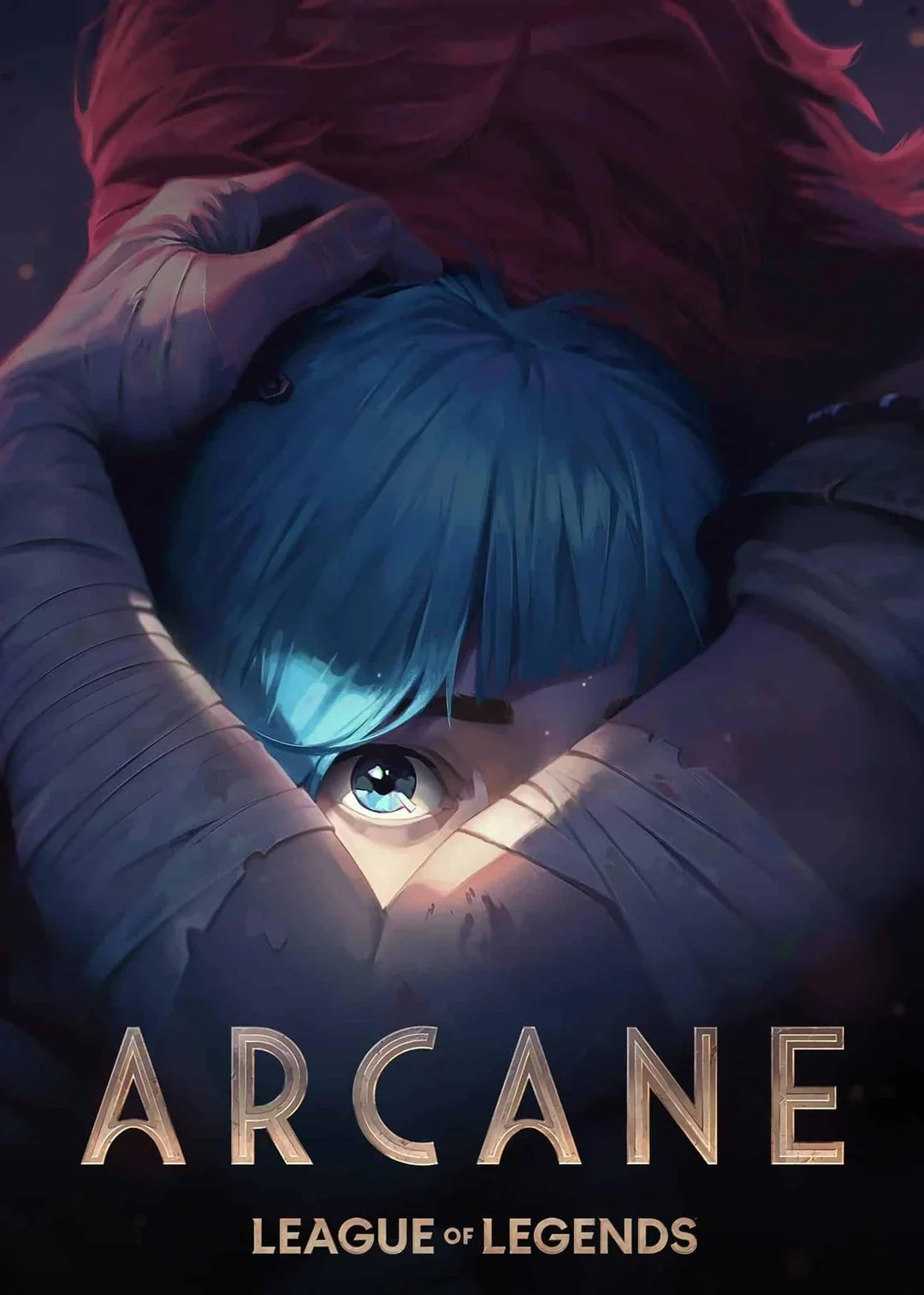
Using existing IPs as a shell or a skeuomorph of sorts to tell great stories can be hard, but the payoff is great if done well. It widens the accessibility of these stories and gives us a greater nuanced understanding of both the source material and the derivation. It's also why subversion is such a fantastic genre, especially when you consider the works of things like Lovecraft. Arcane does exactly this: it's both a shell and a compelling origin story, set in the world of League of Legends, one that's rendered in this truly unique visual style that gets more confident as the show goes on.

As a game, I found League of Legends to be deeply inaccessible, with a near-vertical learning curve and really high multiplayer peer pressure, both of which can lead to a potential for toxicity by established players and unapproachability by new audiences. But this show is not that. Instead, it's a compelling, deeply nuanced tale of class, an examination of how we decide who gets to have access to technology, and the subject of rule. It also touches on something I've been thinking of a lot with what's going on in the world, which is the abstraction of the oppressed.

That it's told through the conflict of two sisters makes it instantly approachable, and allows the show to really spell out what it feels like to live through trauma, to live through loss, and to have desire in a world that's at war.

Book logged on May 1, 2026
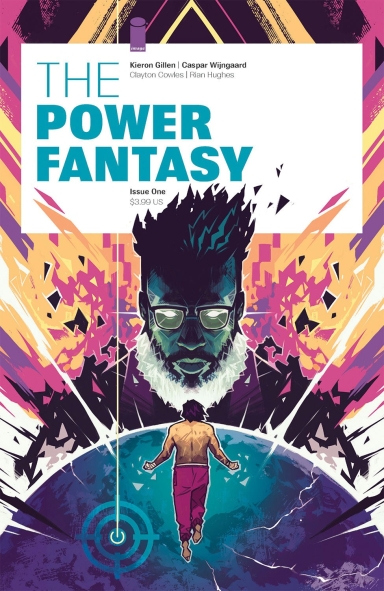
The Power Fantasy
Kieron Gillen // Caspar Wijngaard

Kieron Gillen is one of my favorite comic book writers and The Power Fantasy is him operating at top form. Using the metaphor of super powered humans, this story handles familiar territory such as conflict and escalation, but also touches on grief, ideology, and change.

Article logged on April 24, 2026

Personally, of course, Menon wore ‘just a loin-cloth’ in the afternoons, because as a man it was still permissible to do this. Yet for females the rules had been modified. Menon grew up with bare-breasted women, but with exposure to the wider world, he too came to frown upon that old tradition. He had absorbed (and was now endorsing) an external gaze in which women’s bodies necessarily needed covering up. To not do so became ‘abnormal’—or to channel the scholars referred to earlier, it was no longer ‘proper’. Which is fine, given that sensibilities change over time in every culture. Trouble arises, however, when we project a modern dynamic into the past to trigger unhistorical outrage and a well-meaning but misplaced indignation.

Article logged on April 23, 2026

A note on the delimitation bill

The genuinely serious objections to these bills are structural and are barely being discussed. We are redrawing India’s constituency map using 2011 census data, eighteen years old by the time elections are held under it in 2029. Worse, Parliament has now given itself the power to decide by simple majority when any future delimitation occurs and which census it uses. There is no automatic constitutional trigger anymore. Every future government can time it to its own electoral advantage. The delimitation being carried out today could govern Indian elections for three decades, based on data that was already stale when the exercise began. Will this nullify any electoral advances possible through the realization of a caste census, which some states are considering or have considered?

Article logged on April 16, 2026

Alongside a fascinating piece of history lost to time is this little nugget:

Pass through the doorway and you'll finally come face to face with a grave covered with a Persian rug, decorated with a giant AI rendering of a Mughal Princess.

A story about someone lost to time and erased by history, only to be revived and rendered by the approximation of a model. Conquistadors or Claude, the oppressor always erases memory.