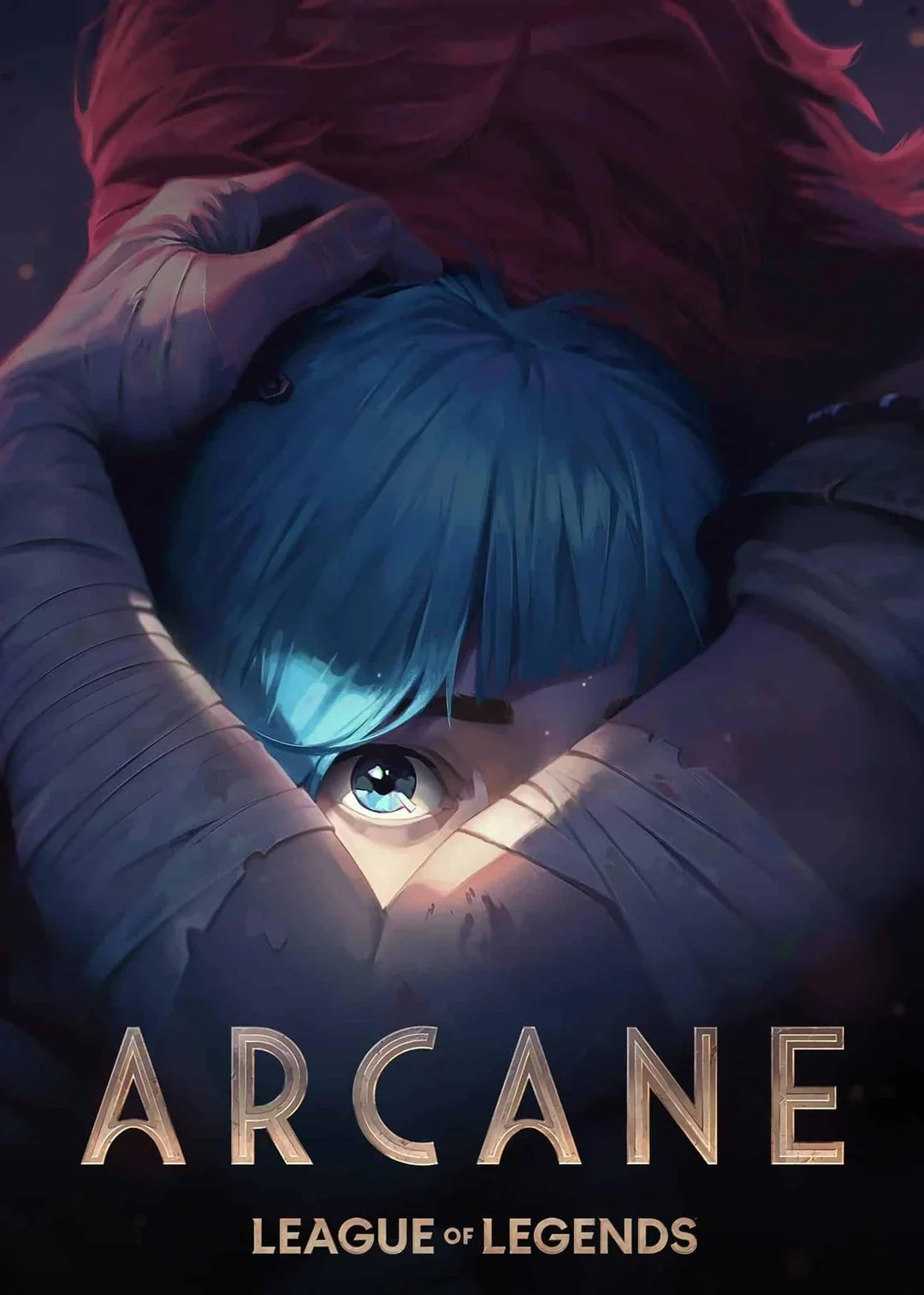
Arcane
Using existing IPs as a shell or a skeuomorph of sorts to tell great stories can be hard, but the payoff is great if done well. It widens the accessibility of these stories and gives us a greater nuanced understanding of both the source material and the derivation. It's also why subversion is such a fantastic genre, especially when you consider the works of things like Lovecraft. Arcane does exactly this: it's both a shell and a compelling origin story, set in the world of League of Legends, one that's rendered in this truly unique visual style that gets more confident as the show goes on.
As a game, I found League of Legends to be deeply inaccessible, with a near-vertical learning curve and really high multiplayer peer pressure, both of which can lead to a potential for toxicity by established players and unapproachability by new audiences. But this show is not that. Instead, it's a compelling, deeply nuanced tale of class, an examination of how we decide who gets to have access to technology, and the subject of rule. It also touches on something I've been thinking of a lot with what's going on in the world, which is the abstraction of the oppressed.
That it's told through the conflict of two sisters makes it instantly approachable, and allows the show to really spell out what it feels like to live through trauma, to live through loss, and to have desire in a world that's at war.
Arcane
Using existing IPs as a shell or a skeuomorph of sorts to tell great stories can be hard, but the payoff is great if done well. It widens the accessibility of these stories and gives us a greater nuanced understanding of both the source material and the derivation. It's also why subversion is such a fantastic genre, especially when you consider the works of things like Lovecraft. Arcane does exactly this: it's both a shell and a compelling origin story, set in the world of League of Legends, one that's rendered in this truly unique visual style that gets more confident as the show goes on.
As a game, I found League of Legends to be deeply inaccessible, with a near-vertical learning curve and really high multiplayer peer pressure, both of which can lead to a potential for toxicity by established players and unapproachability by new audiences. But this show is not that. Instead, it's a compelling, deeply nuanced tale of class, an examination of how we decide who gets to have access to technology, and the subject of rule. It also touches on something I've been thinking of a lot with what's going on in the world, which is the abstraction of the oppressed.
That it's told through the conflict of two sisters makes it instantly approachable, and allows the show to really spell out what it feels like to live through trauma, to live through loss, and to have desire in a world that's at war.